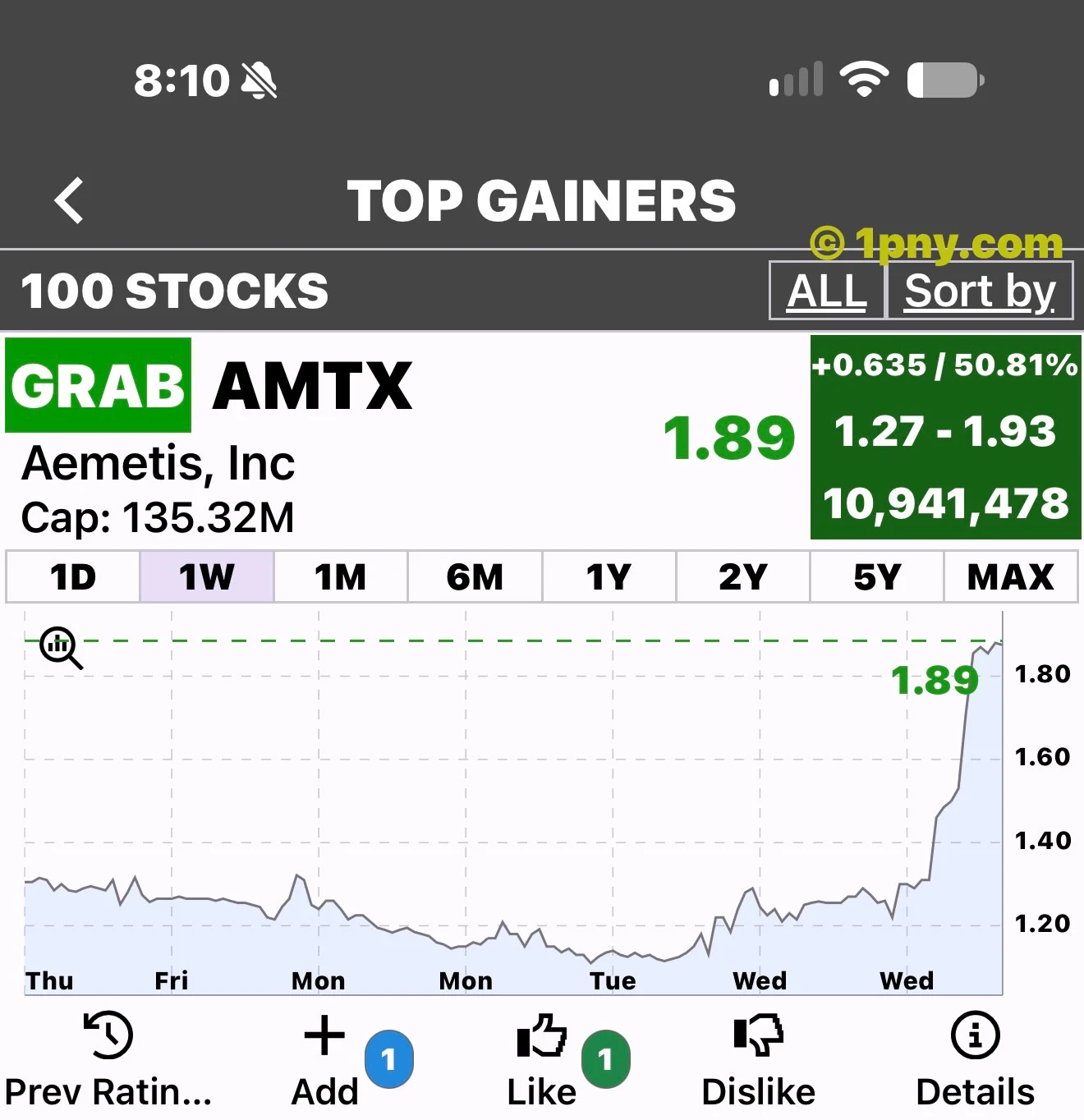
$AMTX, $1.255. According to PennyGems App stock analysis aemetis (AMTX) rose approximately 49% in the original supplied PennyGems screenshot on November 5, 2026. Its quarterly profit deserves a closer look at the contribution from clean-fuel tax credits.
AMTX: A profit with a tax-credit boost
Renewable-fuels company Aemetis reported third-quarter revenue of $88.2 million and net income of $5.2 million, compared with a loss in the year-earlier quarter.
There is an important detail behind the turnaround: revenue included $24.7 million in Section 45Z clean-fuel tax-credit income. The company’s quarterly filing says roughly $11 million was a cumulative adjustment covering the first half of 2026. That means investors should be careful about treating the entire quarter’s result as a recurring run rate. [Aemetis results](https://aemetis.com/aemetis-reports-third-quarter-2026-financial-results/) · [Quarterly filing](https://www.stocktitan.net/sec-filings/AMTX/10-q-aemetis-inc-quarterly-earnings-report-d31ce1d80542.html)
The PennyGems snapshot
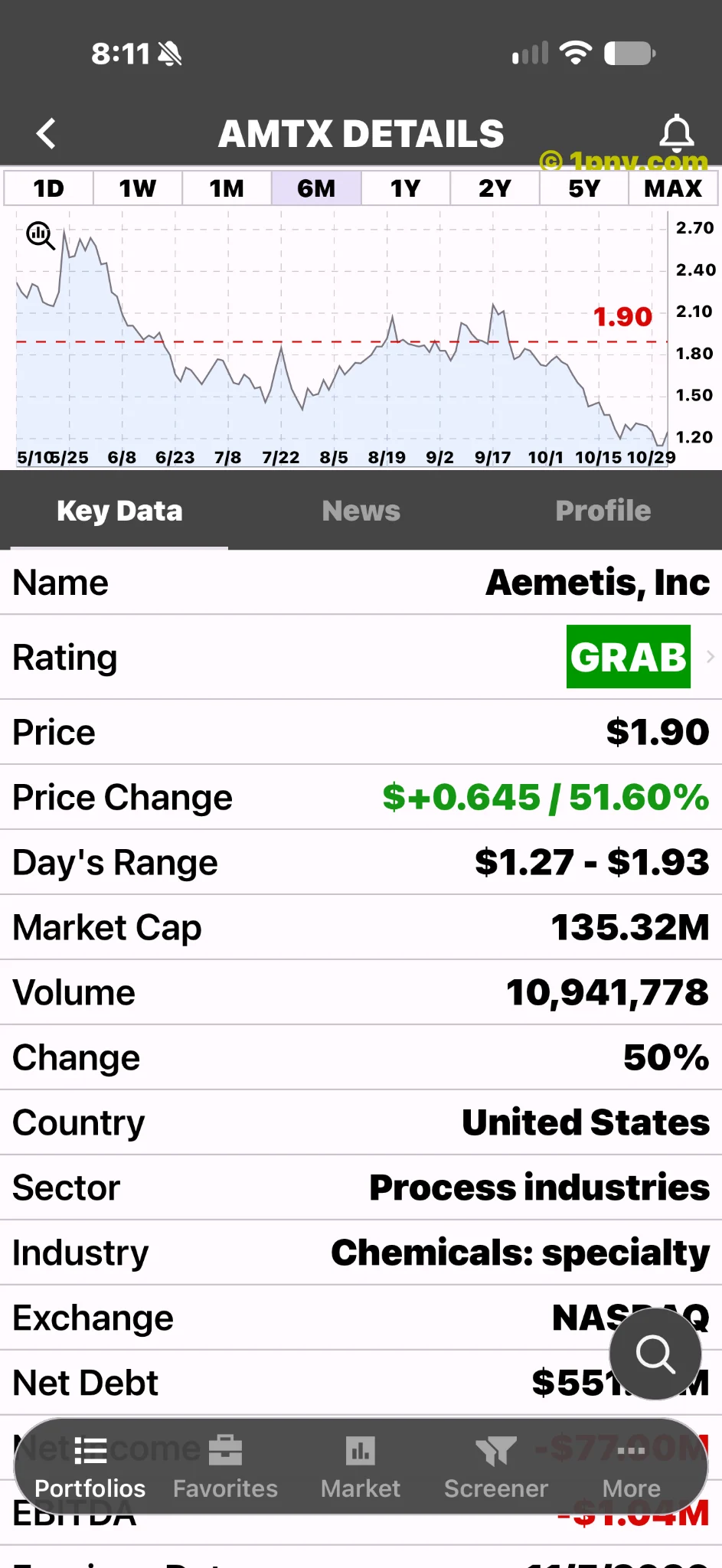
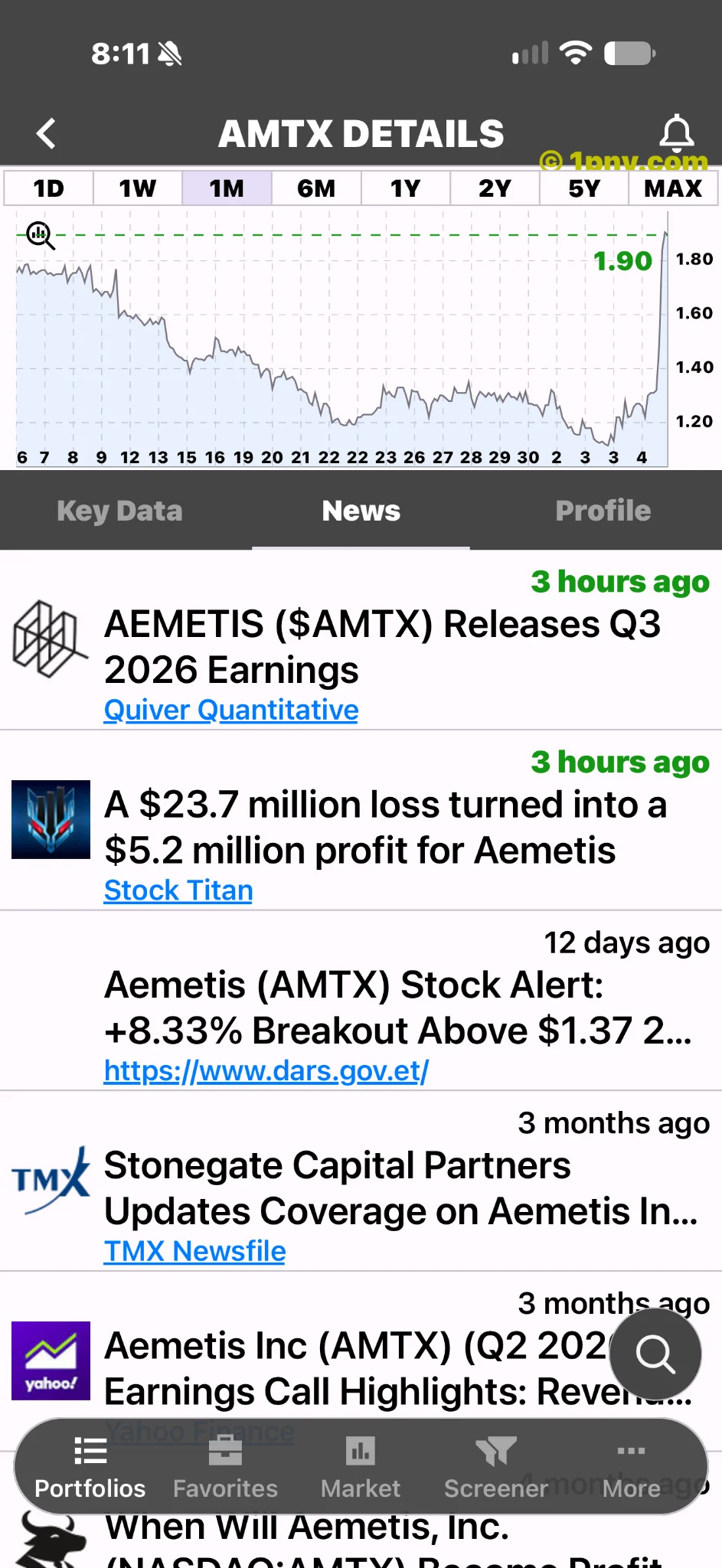
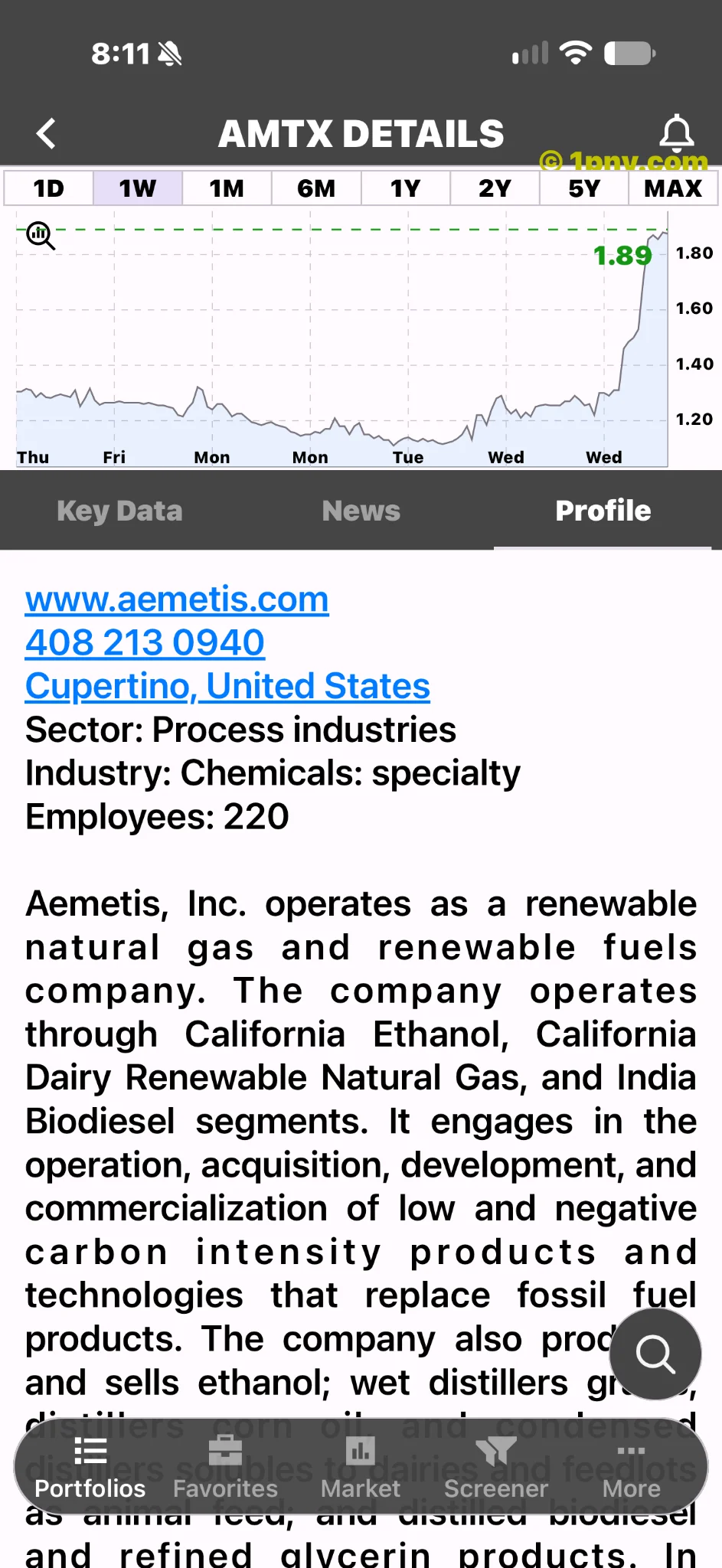
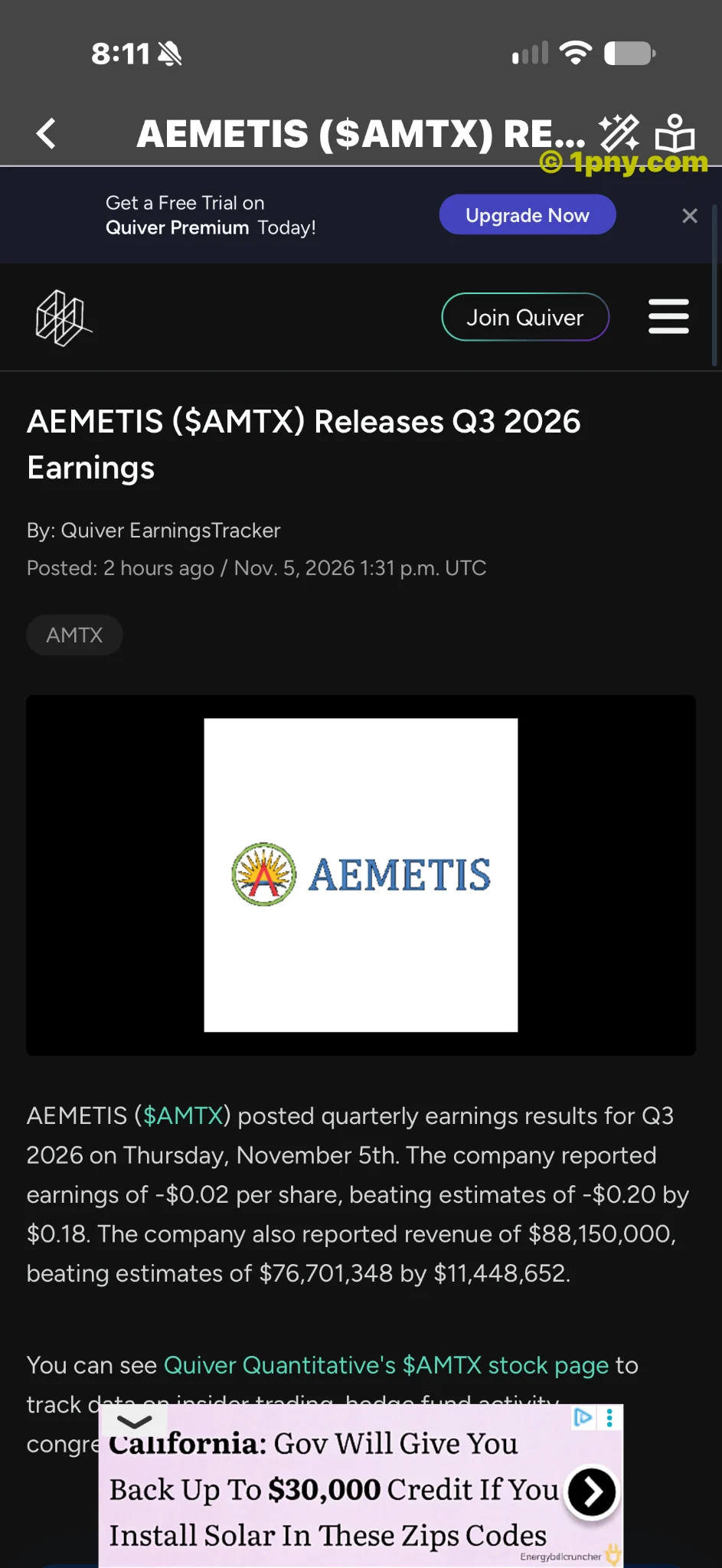
The accompanying images show AMTX charts and company information captured in PennyGems. Their displayed prices and percentage changes can differ from the original market screenshot because they are separate snapshots. App ratings and news-feed entries are research inputs, not proof of investment value.
Separate production economics from credit recognition
The key comparison is not simply profit versus loss. Readers also need to understand which items contributed to the change and which period those items represent. A clean-fuel credit can be economically meaningful while still making comparisons between quarters harder to interpret.
The first-half adjustment illustrates that problem. Although recognized in the reported quarter, it relates to an earlier period. Treating the entire quarterly benefit as something that repeats every three months would mix a catch-up item with the quarter’s ongoing activity. Multiplying the reported result by four would therefore be an assumption about future performance, not a forecast established by these results.
The same care applies when moving between revenue, net income and cash. Revenue measures recognized activity under accounting rules; net income reflects expenses and other applicable items; cash-flow reporting shows cash movements. An earnings headline does not supply all three answers. Investors should compare the income statement, relevant tax-credit notes and cash-flow statement rather than assuming that one favorable number captures the whole business.
Read the earnings measures on their own terms
The supplied images include a company data screen, a news feed and a third-party report showing per-share earnings. These displays should not be merged into a single calculation without checking their definitions and periods. A total net-income figure and an earnings-per-share figure have different denominators and may also involve different attribution or adjustments.
The quarterly filing provides the starting point for checking those distinctions. Look for the earnings-per-share calculation, the income attributable to the relevant shareholders, any adjustments and the share count used. Without that reconciliation, a reader should not conclude that differently labeled figures are interchangeable or that one automatically disproves the other.
For the next reporting period, the useful comparison is how operating performance and credit recognition develop together. A repeatable improvement would be more informative than a single quarter whose timing includes a cumulative adjustment.
What investors should watch
Investors should separate the quarter’s reported result from a recurring operating run rate. The cumulative first-half adjustment is especially relevant when comparing periods. Total net income and earnings per share are distinct measures; a screenshot quoting one should not be substituted for the other.
News may help explain interest in a stock, but it cannot establish exactly why every trader bought or sold. A large percentage gain does not tell the whole story, and volatile stocks can reverse quickly.
*Price movements are from the supplied PennyGems screenshot and are not live quotes or a recommendation to buy or sell.*