$RBBN, $1.48. According to PennyGems App stock analysis some technology stories are easier to understand when the customer is a transit system rather than a hypothetical future market. Ribbon Communications has that kind of example: an expanded role in the communications infrastructure supporting New York’s transportation network. The investment opportunity is to examine a real deployment, then ask whether the wider business can earn attractive returns.
That provides a substantive reason to investigate RBBN. It does not prove that an October 8 announcement caused the gain displayed in a later screenshot.
An existing customer adds more infrastructure
Ribbon said on October 8 that its MTA relationship was expanding. Its existing C20 platform supports voice services for about 70,000 employees. The new phase adds G5 Media Gateway equipment and professional services alongside a NUSO contact-center solution. [1]
For our analysis, the appeal is operational relevance: communications upgrades must work while the customer continues operating. The announcement does not disclose a contract value or a quantified earnings contribution. We would not turn the size of the transit system into an estimate of Ribbon’s revenue.
What the PennyGems screenshot shows
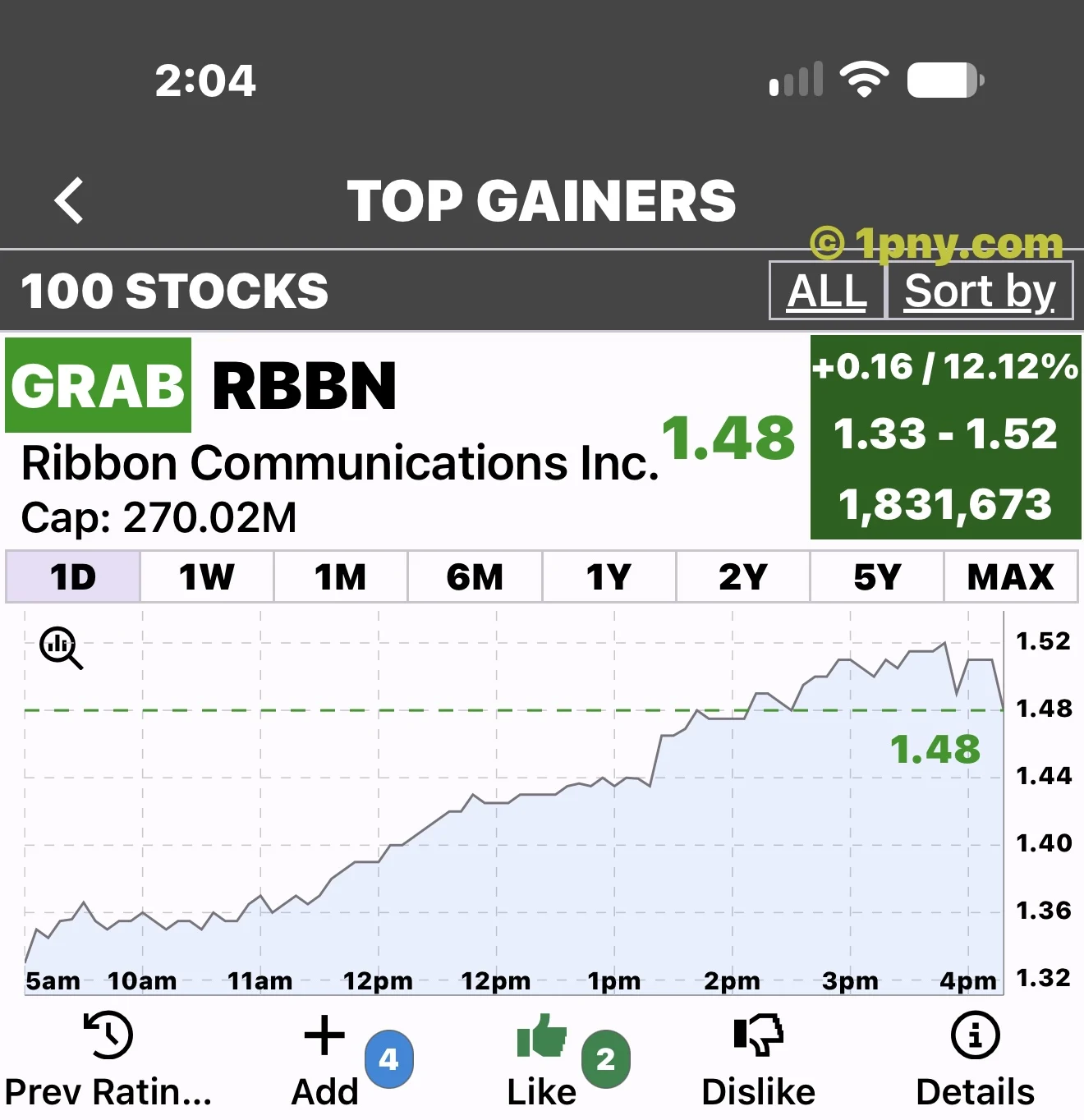
The supplied one-day image shows RBBN at 1.48, up 12.12%, with a GRAB label. It depicts a generally rising session with a pullback near the end. These are the app’s displayed readings, not independently verified closing figures; the full capture date and quote currency are not shown.
The pattern illustrates interest and volatility. It does not distinguish fundamental buying from positioning or explain why individual investors traded. A customer announcement is useful context, but attributing the exact percentage move to it would go beyond the evidence reviewed.
October earnings provide a broader checkpoint
Ribbon’s October 13 notice scheduled third-quarter results for after the market closes on October 27, with a call at 4:30 p.m. Eastern. The scheduling notice did not provide those results. [2]
We would use that release to examine demand across the company, the relationship between revenue and margins, and whether operations produce cash. An attractive customer example can coexist with pressure elsewhere. A stock thesis should therefore address the whole company, not extrapolate from one deployment.
Customer relevance must translate into shareholder value
A stronger investment case would show repeatable customer demand supported by acceptable delivery costs and cash collection. A weaker case would feature implementation spending or pricing pressure that consumes the benefit of additional work. These are questions to test against results, not claims that either scenario has already occurred.
RBBN stands out because the infrastructure application is concrete and the next financial checkpoint is close. Readers should compare business progress with the price paid for the shares. A compelling operational story and an attractive investment are related questions, but answering the first does not automatically settle the second.
About PennyGems, the app behind the screenshots
The reader supplied these PennyGems chart screenshots. Available for iPhone [4] and Android [5], it helps readers research low-priced stocks, compare sectors and review buy/sell ratings updated daily. Its iPhone listing advertises over 2,000 stocks under $10. These signals can help build a watchlist and flag weaker candidates; they do not guarantee returns.