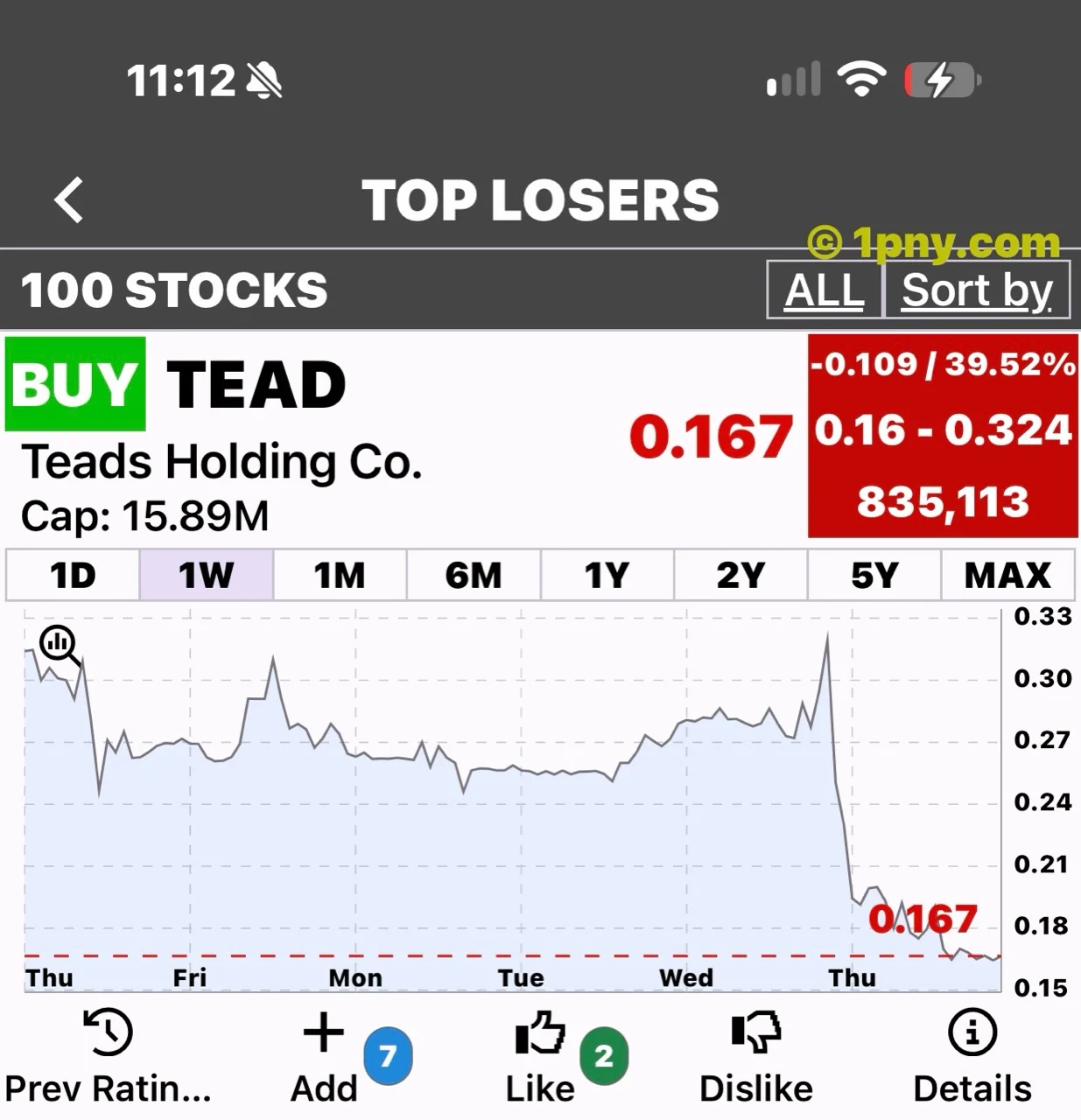
Teads Holding (NASDAQ: TEAD) dropped sharply as investors assessed a third-quarter report showing weaker revenue, compressed margins and continued cash consumption. The supplied PennyGems chart and key-data screenshot show $0.167, down 39.52%, with volume of 835,113 shares. Other supplied screens show $0.165. These are separate captured readings, not live prices or a confirmed closing quote.
The central issue is the combination of deteriorating operations and substantial debt. A large accounting write-down made the headline loss especially dramatic, but it is important to distinguish that charge from the underlying business performance and actual cash outflows.
Revenue weakness reached the profit line
Teads reported quarterly revenue of $235.1 million, down 26% year over year. Gross profit fell 42% to $60.9 million, and gross margin declined to 25.9% from 33.2%. Adjusted EBITDA turned negative at $8.1 million, compared with positive $19.2 million a year earlier. [Quarterly results](https://www.stocktitan.net/news/TEAD/teads-holding-co-announces-third-quarter-2026-yvxdq39wsaxg.html).
The gross-profit decline is especially relevant because it exceeded the revenue decline. A smaller proportion of sales remained available to cover operating expenses. That makes restoring profitability harder than simply replacing lost revenue.
For an advertising platform, investors need to understand both transaction activity and the economics retained from that activity. A company can introduce products or sign partnerships while still experiencing pressure on its consolidated results. Product announcements become financially meaningful when they translate into sustained revenue, stronger margins and cash generation.
The headline loss was not all cash burned
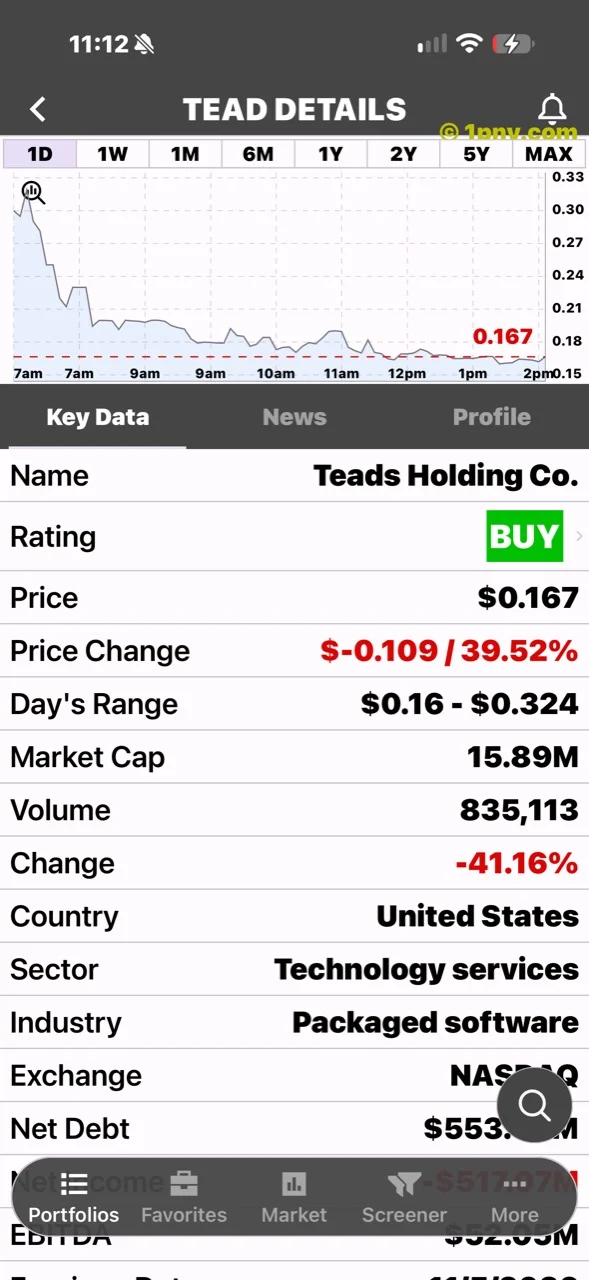
The reported net loss was $325.5 million, including a $272.4 million noncash goodwill impairment. Operating cash use was $27.9 million. Quarter-end cash was $90.3 million, while debt obligations totaled $657.2 million.
A goodwill impairment reduces the accounting value attributed to a business acquired in the past. It does not mean an equivalent amount of cash left the bank during the quarter. However, dismissing the charge entirely would also miss its significance: it reflects a reassessment of value.
Cash flow answers a different question: how much funding current operations consumed. Debt adds another layer because financing obligations remain relevant even when an accounting charge is noncash. These measures should be read together rather than compressed into a single claim that the company lost hundreds of millions in cash.
The balances alone do not establish when a financing shortfall might occur. That assessment requires maturity schedules, interest requirements, available facilities and future operating performance. A simple cash-divided-by-quarterly-burn calculation would ignore those moving parts.
A finance leadership transition adds another checkpoint
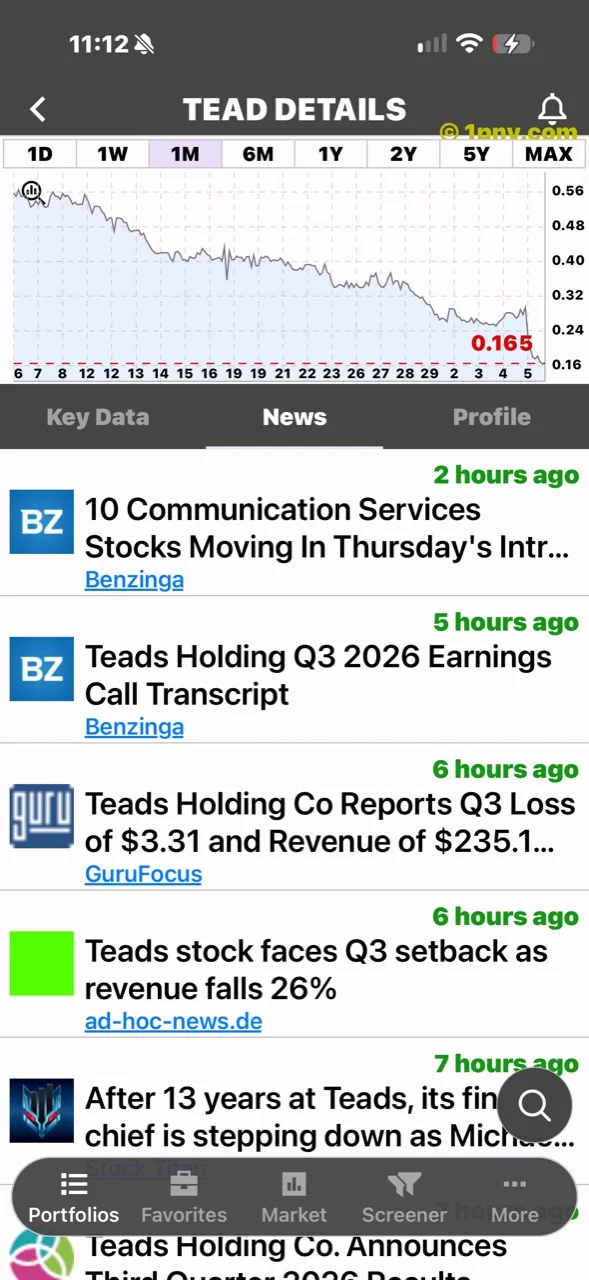
Teads also announced Michael Coyle as chief financial officer, effective November 11, 2026, succeeding Jason Kiviat. The announcement says Kiviat will remain in a transitional and advisory capacity over the coming months. [Company announcement included in its filing](https://www.stocktitan.net/sec-filings/TEAD/8-k-teads-holding-co-reports-material-event-2464ea71325e.html).
The transition is relevant to execution and financial oversight, but it is not evidence of wrongdoing or proof that the departure caused the selloff. Investors can evaluate the new leadership through subsequent disclosures on costs, liquidity and operating priorities.
A credible improvement would involve several indicators moving together: a stabilizing revenue base, better gross margins and less cash consumption. One favorable segment or a new appointment would not, on its own, resolve the pressure visible in the consolidated report.
What could change the investment debate?
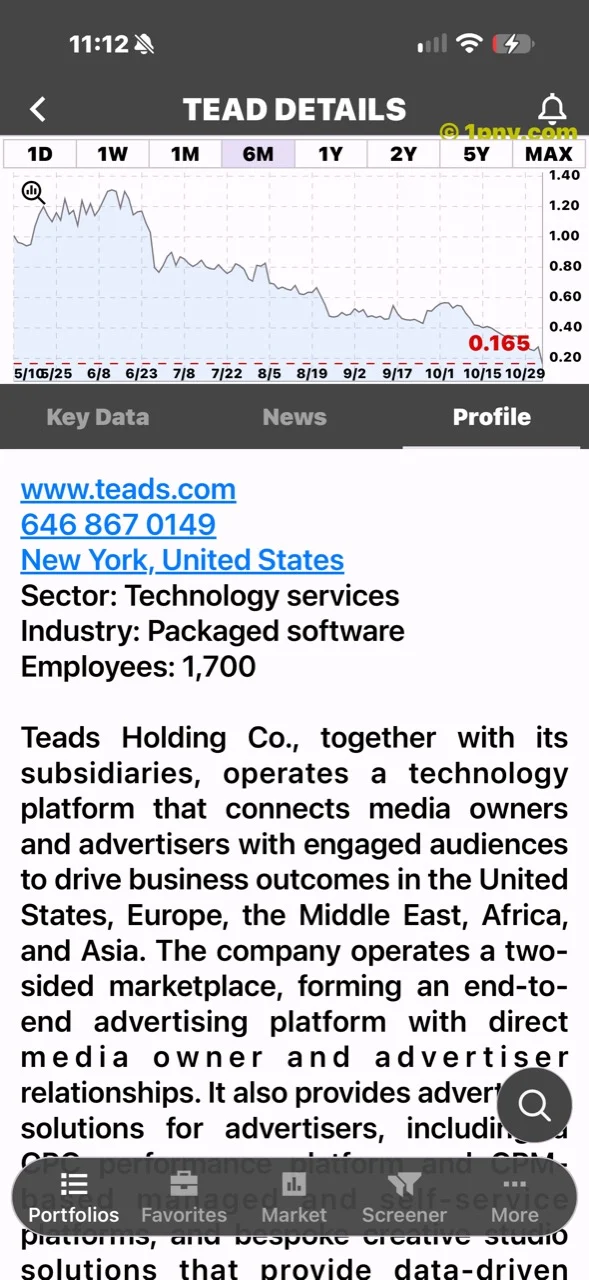
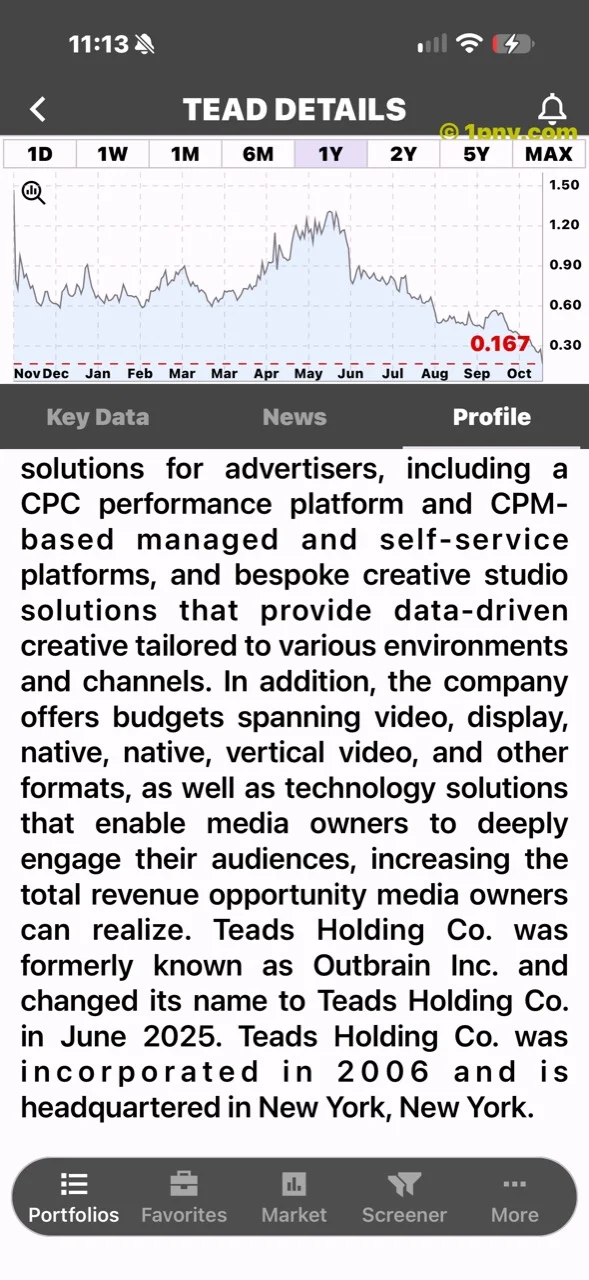
The immediate question is whether Teads can improve its operating economics while managing its financial obligations. Future earnings releases will offer a stronger test than a rebound in the share price alone.
The supplied news screenshots provide context, but their truncated headlines are not substitutes for complete disclosures. Likewise, the app's BUY label is its own signal, not this article's recommendation. A low share price does not establish that a stock is inexpensive relative to its risks.
The reported results provide a clear basis for investor concern, while the exact contribution of each factor to the trading decline cannot be measured from the screenshot. Image credit: PennyGems / 1pny.com.